Group charter from 10 passengers
A charter puts the aircraft on your timetable and lands it at the airport closest to where you are actually going.
Past about ten people, the arithmetic changes.
Once a group passes roughly ten travellers with a fixed schedule, scheduled flights start to cost more than they save: in connections, in waiting time, in the meeting that has to be moved because one leg was delayed.
What we arrange
Full aircraft from turboprop to narrowbody, point to point, on the date and at the time you set.
Corporate and industrial travel, associations and clubs, event and incentive groups, pilgrimage travel, and shuttle programmes for companies with a recurring route.
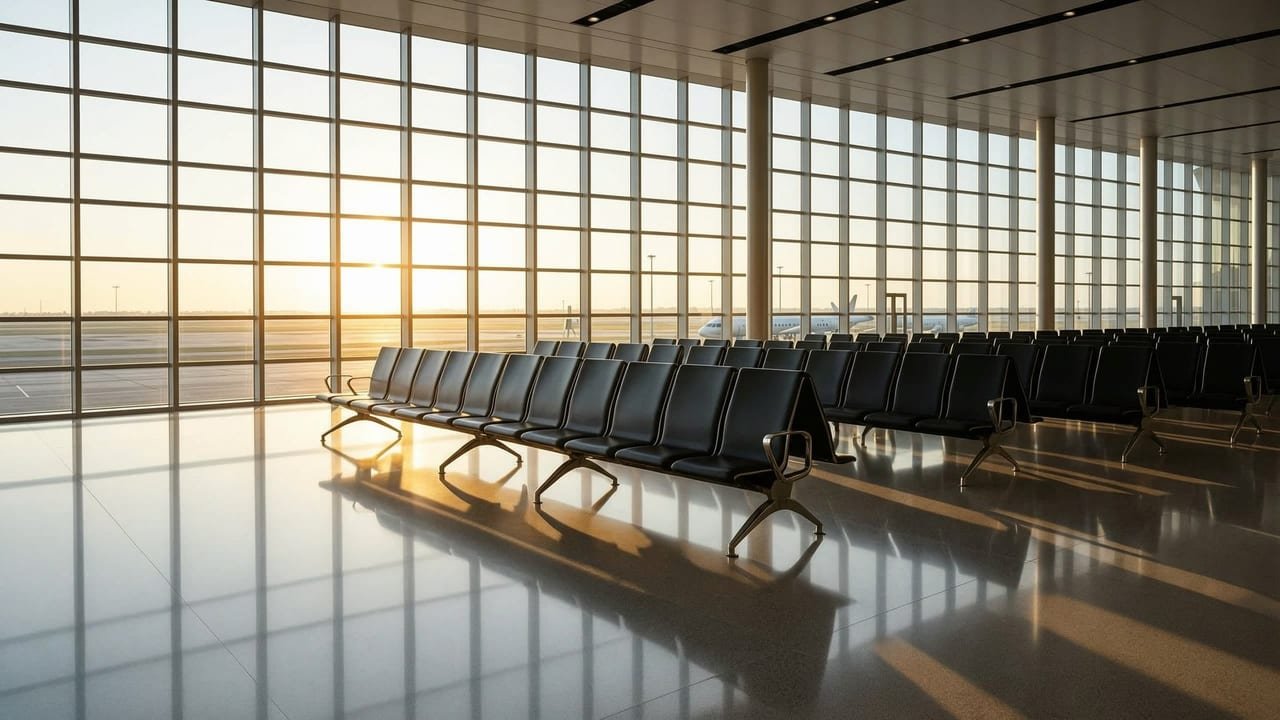
What you get that an operator cannot give you.
Ground problems are what turn a charter into a story.
Into the airport closest to your destination.
Not the nearest hub, and not whichever slot was left.
How a quote is built
Aircraft type and flight time set the base. Positioning, the season, the airports at both ends and how much notice we have move it from there.
You get one figure for your mission with the components named: positioning, handling, catering, taxes and fees, against a named registration and a named operator. Anything that can still change is listed as a variable with a sense of its size, so nothing turns up on the invoice that was not on the quote.
The group decides the type, not the other way round.
Seat count is not the only limit. Runway length at both ends, the range of the sector and the size of the hold door all decide the type, which is why we ask what travels and where before we recommend anything.
Before you enquire.
What is the smallest group worth chartering for?
From about ten passengers upward a full aircraft starts to compete with scheduled travel, once you count connections, waiting time and the meetings that move because a leg was late.
Below that, a private jet is usually the better answer, and we will say so rather than sell you a larger aircraft.
What is included in the quoted price?
Positioning, handling, catering, taxes and fees, against a named aircraft registration and a named operator.
Anything that can still move, such as de-icing, extended waiting time or a slot change, is listed as a variable with an indication of its size. It is not buried in a footnote and it is not discovered on the invoice.
How far ahead should we book?
The earlier the better, because you are buying from a finite pool of aircraft and the good operators fill up first. For a recurring programme, booking the series is usually both cheaper and safer than booking each departure.
Short notice is possible and we do it regularly. What changes is availability, not whether it can be done.
What if our passenger numbers change?
Tell us as early as you can. A change within the booked aircraft is usually straightforward. A change that moves you into another aircraft class is a new quote, because it is a different aircraft and often a different operator.
Can we carry equipment beyond normal baggage?
Yes, and it is planned into the load from the start rather than squeezed in on the day. Tell us the total volume and the heaviest single item at the enquiry, because both can change which aircraft we recommend.
Tell us the mission.
Who travels, with what luggage, from where to where, and when. An assessment the same day.